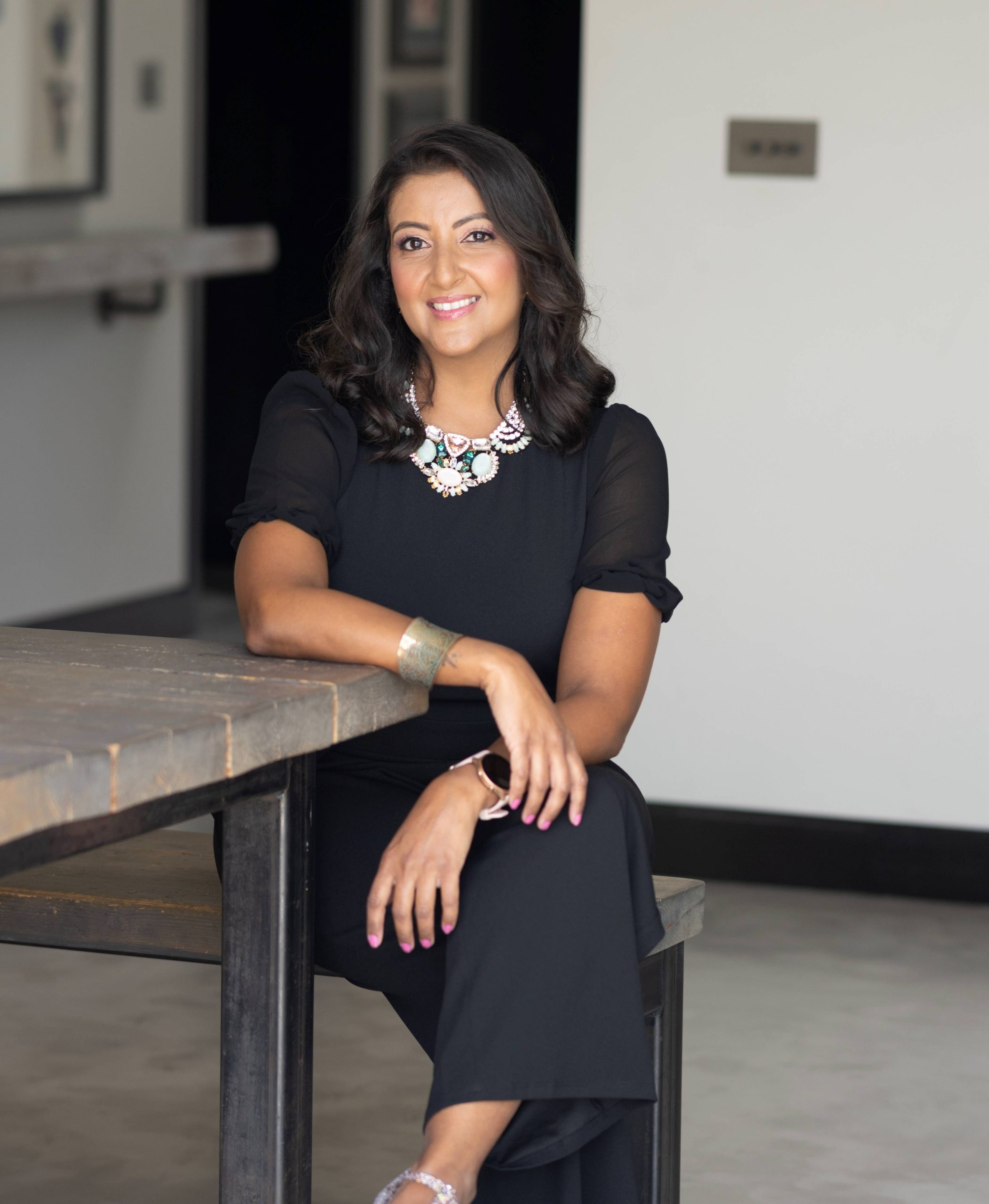
Kreena Dhiman carries the maths of her own survival everywhere she goes — the years counted in treatments, the children counted in journeys, the invisible scars she has called "hairline fractures in the heart."
"Procreation in the South Asian community is not just a given, it's an expectation."
— Kreena Dhiman
A diagnosis at 33
Kreena Dhiman was 33 when she was diagnosed with breast cancer. The tumours were hormonally sensitive, so alongside chemotherapy, radiotherapy and a double mastectomy, doctors placed her into a ten-year medical menopause, shutting down her ovaries before she had ever had the chance to try for a family.
Three years later, on holiday in Canada, she was admitted to A&E unable to breathe. The diagnosis was acute heart failure, a delayed effect of the chemotherapy that had saved her life. Her family were told her prognosis was poor. The drug that had cured her cancer had damaged her heart beyond repair.
Before chemotherapy began, she and her medical team agreed to one urgent round of fertility preservation. It meant weighing two risks against each other: the hormones needed to create embryos could aggravate the cancer growing inside her. She has said she couldn't bring herself to celebrate the embryos created in that window — she could only wonder whether the procedure had cost her time she didn't have. She signed consent forms allowing her husband to use those embryos if she didn't survive, and found what she has called "a perverse comfort" in knowing that whatever happened, a piece of her might still make it into the world.
Why the silence made it harder
Kreena has written about how her South Asian upbringing shaped the loneliness of the experience. She searched forums and social media for another South Asian woman going through the same thing, and couldn't find her. When she started IVF, she couldn't find South Asian voices sharing the experience either — and when surrogacy became her only path to parenthood, she has said she knew she'd be "the only brown girl in the room."
"There is so much narrative around being loyal to family, about blood being blood and about shared genes being the definition of family."
Becoming a mother through surrogacy
After her diagnosis confirmed she would be unable to carry a pregnancy herself, Kreena and her husband began an independent UK surrogacy journey — learning the process, the law and the language of it as they went, because so little of it had been mapped out for someone like her before. After meeting several women who weren't quite the right match, in late 2016 they met Ina, who became their first surrogate.
In April 2018, nine months after their first embryo transfer, their daughter Amaala was born — conceived from an embryo frozen before Kreena's chemotherapy began. Amaala's name means "hope" in Arabic. In their home, Kreena calls her their Laksmi.
A second journey: egg donation and triplets
Kreena's first surrogate was unable to carry again, and the embryos frozen before chemotherapy no longer existed, so a second child meant finding an egg donor too. In a culture where, in her words, "blood being blood" and shared genes are so often treated as the definition of family, that search carried its own weight. South Asian egg donor banks in the UK were, she has said, "almost non-existent," so she found a donor in South Africa and travelled to North Cyprus to create embryos using her eggs — a meeting she has described as humbling, and an honour.
By the end of 2019 she had found her second surrogate, Laura. In February 2020, weeks before international borders closed for the pandemic, they flew to Cyprus for the embryo transfer. In August 2020, Kreena's triplet sons — Aanav, Arvaarn and Anaayan — were born ten weeks premature, each around 3lb. They spent eight weeks in neonatal care while Kreena and her husband relocated to be close to them.
Building the space she couldn't find
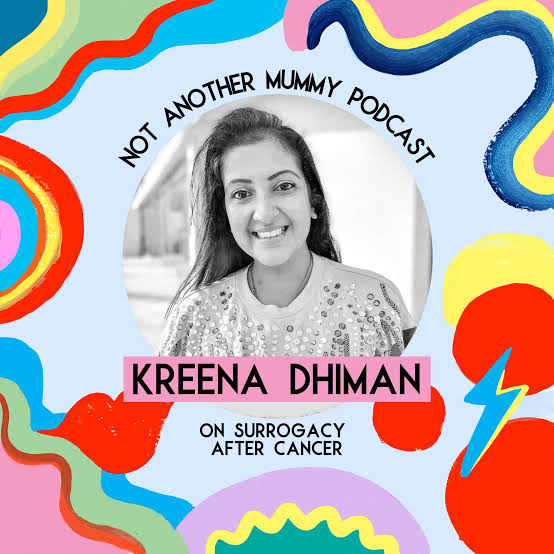
After Amaala's birth, Kreena co-founded a podcast with a fellow mother through surrogacy, Fran, to give other people going through infertility somewhere free of shame to turn to. She continues to speak publicly about her experience and is an Ambassador for The Fertility Show.
Kreena's story at a glance
- Breast cancer diagnosis at 33; hormone-sensitive tumours
- Ten-year medical menopause; later, chemotherapy-related heart failure
- Daughter Amaala, born via surrogate, April 2018
- Triplet sons Aanav, Arvaarn and Anaayan, born via surrogate and egg donation, August 2020
- Co-founder of a podcast supporting people through infertility
- Ambassador, The Fertility Show
Kreena has described her own story as one of tragedy and hope, of grief and gratitude, of surrender and fortitude. She doesn't believe any of it was luck or coincidence — she believes her family was built the way it was for a reason: to change mindsets, and to give other people permission to keep going, even when, as she puts it, the seas feel uncertain.
Kreena Dhiman's story is drawn from her own account, published on The Fertility Show blog. Visit her website.
This resonates: