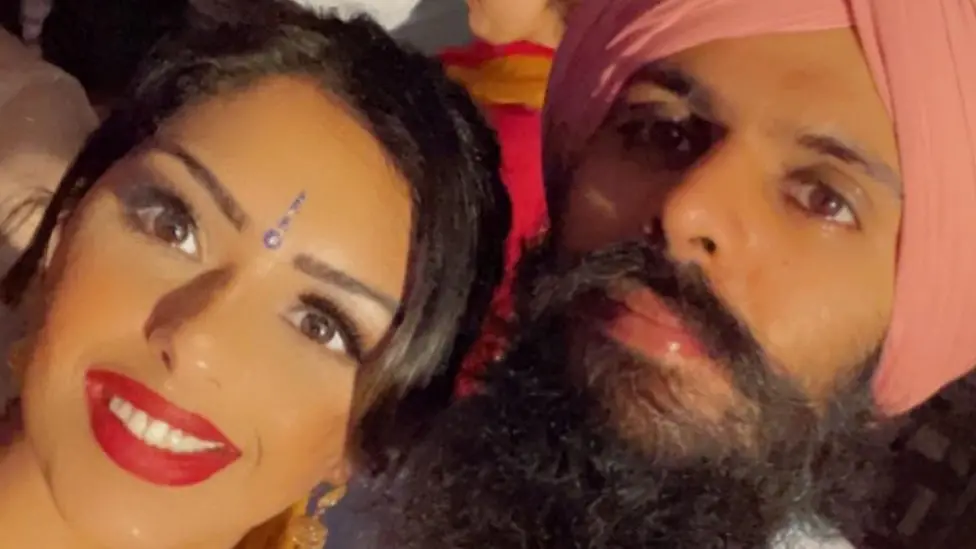
Vik and Sarina Dosanjh
Vik and Sarina Dosanjh lost two pregnancies and went through a failed round of IVF. Miscarriage is often hidden in their community and put down to bad luck. They chose to talk about it openly, so other couples would know they are not alone.
Sarina found out she was pregnant on 12 November 2020, the anniversary of Vik's proposal. Because of COVID rules, she went to the early scans alone. At a private scan at 10 weeks and 5 days, with Vik beside her, they were told there was no heartbeat. It was a missed miscarriage. Sarina then went through hospital treatment on her own, with Vik on FaceTime. A second pregnancy ended three days after they found out. Tests showed Sarina had a low egg reserve and Vik a low sperm count. Vik has said that knowing this gave them comfort, because they could face it together.
Naming what the culture keeps quiet
Doctors called their first loss "bad luck". Vik has spoken about how couples who struggle to conceive can be treated as bad luck in the community. He also speaks about the pressure on men to hold everyone else up and put their own grief aside. Their Sikh faith carried them. Sarina has said she was angry at God at first, and now sees faith as the most important thing. They shared their story on BBC One in Love, Faith and Me: Married, Sikh and Wanting a Baby, in April 2023.
Building somewhere for others to land
They set up the Himmat Collective, a support group for Punjabi and South Asian people facing infertility, IVF and baby loss. Himmat means courage. It runs monthly safe spaces, online and in person. They have also shared their story with Tommy's and Sands, and on podcasts including the Cradle podcast.
Sharing our story helps couples to realise that they are not alone. Sarina Dosanjh, BBC News, 2023.
Living alongside the grief
In April 2024 their son was born. They say the grief for the babies they lost stays with them, and they have learned to live alongside it.
At a glance
- Founded
- Himmat Collective, peer support for Punjabi and South Asian communities facing fertility struggles and baby loss
- Seen and heard
- BBC One (Love, Faith and Me), BBC Radio 4 (Beyond Belief), Cradle podcast
- Shared their story with
- Tommy's, Sands, Taraki
Sources
- Tommy's, April 2021: Missed miscarriage and breaking the silence in the Asian community
- Sands, July 2024: Sarina and Vik's baby loss journey as a Punjabi couple
- BBC News, April 2023: Walsall couple share struggles of starting a family
- BBC News, April 2024: Couple welcomes baby after a rollercoaster journey
- BBC iPlayer: Love, Faith and Me, Married, Sikh and Wanting a Baby
- BBC Sounds: Beyond Belief, Without Child (Radio 4, April 2023)
- Cradle podcast, episode 5: Miscarriage, Visibility and Shared Journeys
- Taraki: Miscarriage and baby loss
- Himmat Collective: their TV, radio, articles and podcasts
This resonates:
Shared with the Appy + Yaar community.