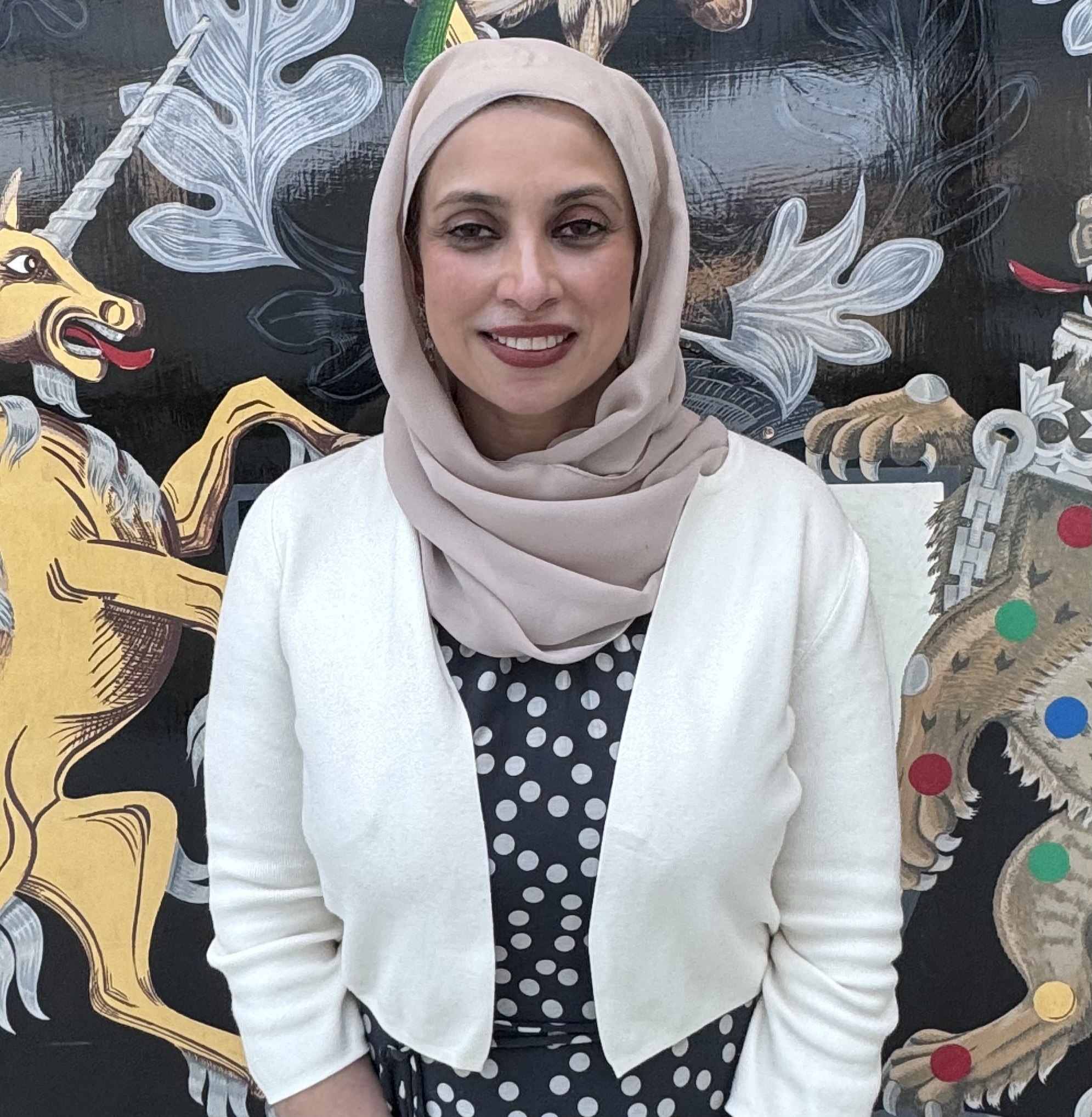
Dr Aaliya Goyal
Coming back to clinical work after a long time away is one of the harder things a doctor can do. There was no template for how to do it, nobody nearby to compare notes with, and no obvious roadmap. So Aaliya built her own. She came back into a system that mostly assumes there is one way in and one way of working. She set about proving otherwise.
What she couldn't stop writing about
Aaliya lost her father when she was sixteen. She had grown up in a South Asian community where conditions like cardiovascular disease and diabetes were treated as a normal part of life, something that happened to people like them, not something anyone was expected to question or could prevent. Losing him young made that acceptance impossible to sit with. She saw unfair, avoidable differences long before she had the language for what they were. She spoke about what she saw and kept writing about it, including in her GP portfolio. She kept going even after her GP supervisor told her to stop.
She saw unfair, avoidable differences long before she had the language for what they were.
But writing only reached so far. In her first GP training placement, a consultant paediatrician took her aside after a ward round and asked whether she had ever considered leadership. She had not. But she could see what it offered: a way to push the things she cared about further than a portfolio ever could. She joined the first cohort of Next Generation GP in the West Midlands, an early-career leadership programme, then put herself forward to lead the following year's cohort, building a national network of people who wanted the same change she did.
By the time she qualified as a GP, she had won national funding for a local GP wellbeing event that went on to win an RCGP award, spoken at the BMA Women in Medicine conference, and stood in front of Associate Deans and the head of the regional GP training school to talk about the future of the workforce.
Choosing the harder patch
The day after she qualified as a GP, Aaliya started a post in an area where roughly ninety per cent of the population are from an ethnic minority background. She took on a Fellowship in Deprivation Health and volunteered with Doctors of the World at their Birmingham pilot clinic, seeing refugees and migrants with inconsistent or no access to healthcare.
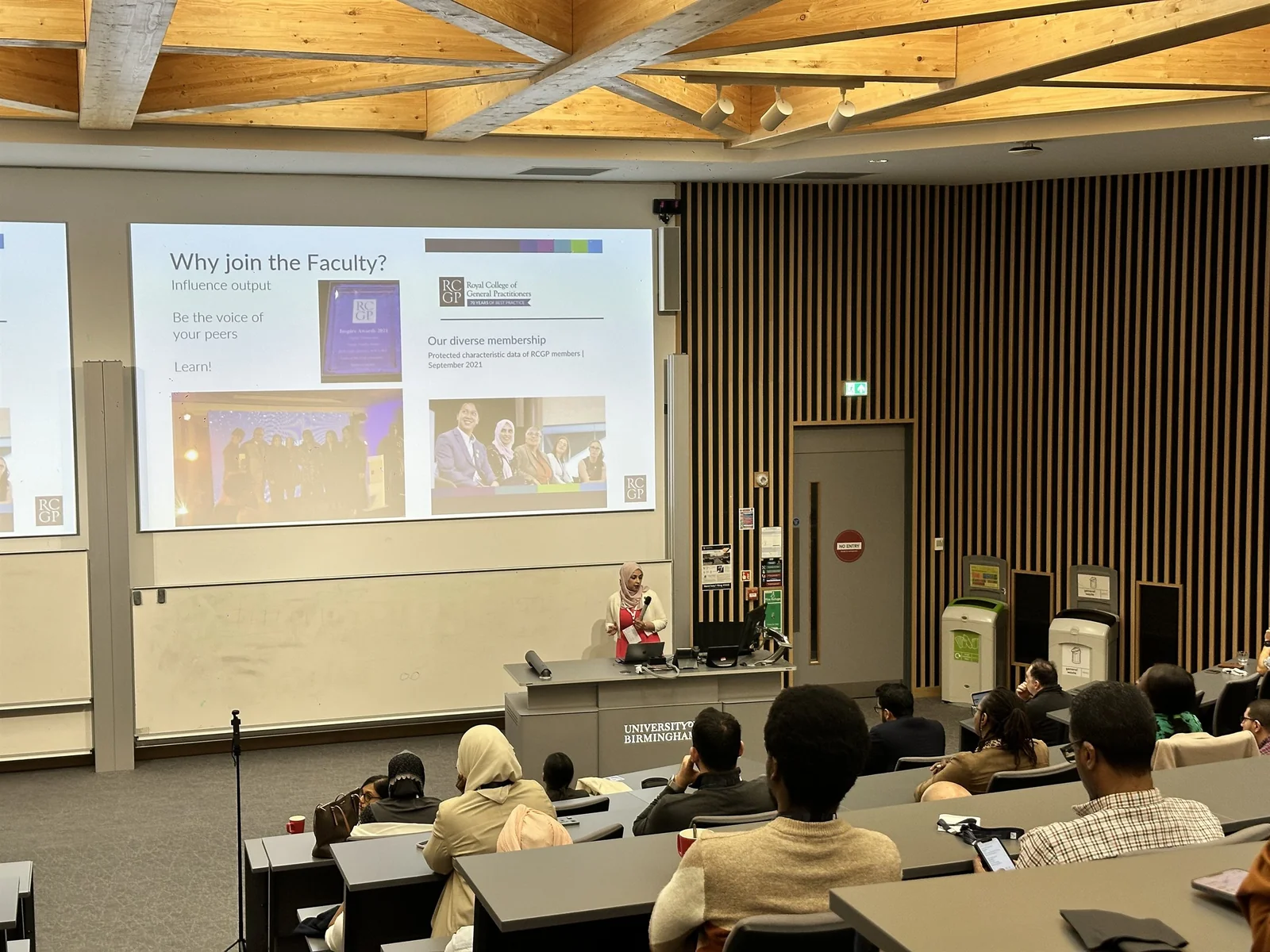
Then came the tables where decisions actually get made. Elected to the Midland RCGP Faculty Board, she became its champion for equality, diversity and inclusion and spearheaded its South Asian Heritage Month programme, celebrating a community that makes up roughly forty per cent of the Midlands GP workforce. Around her first anniversary as a GP, she was competitively recruited as a Primary Care Clinical Leadership Executive in Health Inequalities at the Black Country Integrated Care Board, the second most deprived in the country. The role took her into gurdwaras, mosques, and Hindu and Buddhist temples, sharing public health information in a way the community could actually use and trust.
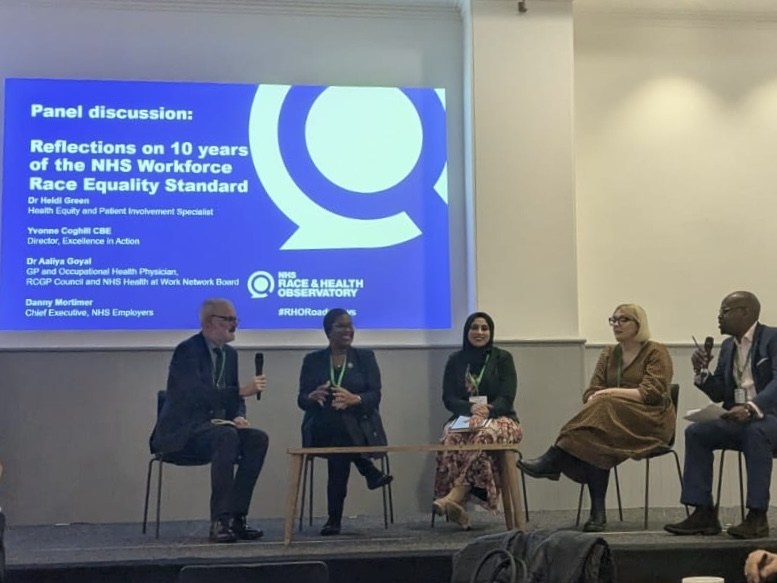
Alongside this she appeared on British Muslim TV talking about health issues affecting Asian communities, and wrote for Asian Voice on the role men can play in advocating for women's health in South Asian communities. She worked with Diabetes UK and Macmillan Cancer Support on tackling inequalities through research and co-production. The RCGP later asked her to record a TEDx-style talk on health inequalities for its online learning platform, and featured her training experience in a 2025 exhibition in London.
Work itself is a health issue
Watching COVID tear through Asian communities working in low-paid, public-facing jobs confirmed something she had suspected for years: work is a powerful and overlooked determinant of health in its own right. She gained a Diploma in Occupational Medicine in 2022 and moved into leadership roles on the NHS Health at Work Network board and regionally at the Society of Occupational Medicine, which highly commended her as an Outstanding Occupational Health Practitioner in 2023. In 2024 she was awarded Membership of the Faculty of Public Health by distinction, recognised for her work on health inequalities.
In August 2025 she was appointed Chair of the Board of Trustees at the Muslim Sports Foundation, a strategic partner of Sport England working to reduce physical inactivity among Muslim communities, the least active faith group in the UK. Though she stepped down the following year, she continues to join the dots between sectors and organisations, finding new ways for people to work together on health.
Using her positions to help others
Aaliya's career changes direction often, but health inequalities stay at the heart of it. Whether she is working clinically, in leadership, in education or at board level, she uses her platform and network to elevate, mentor and sponsor others. She believes giving back is the truest way to leave a legacy: a generation of equally committed people, continuing to make change.
At a glance
- Trained as
- General practice, with a Diploma in Occupational Medicine in 2022
- Specialty
- Health inequalities, across clinical work, leadership, education and boards
- Recognised
- Outstanding Occupational Health Practitioner, highly commended, 2023 · Membership of the Faculty of Public Health by distinction, 2024
- Also
- Chaired the Board of Trustees at the Muslim Sports Foundation, 2025 to 2026
Sources
- Black Country ICB: community events helping to tackle health inequalities
- RCGP health inequalities exhibition: At the Deep End
- Macmillan co-production report, 2023: named contributor
- Diabetic Medicine, 2022: addressing health inequalities in diabetes through research, with Diabetes UK
- Muslim Sports Foundation, 2025: appointing a new Chair of the Board of Trustees
This resonates:
Shared with the Appy + Yaar community.